
Umberto Ecco
Umberto Eco
The mind behind the mystery
Enter the story
Novelist, medievalist and scholar of signs: Umberto Eco transformed his fascination with language, interpretation and history into a remarkable literary mystery.
Independent fan interpretation · Original illustrative imagery
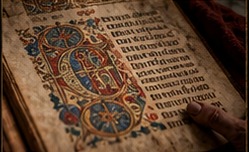
A Life Among Books
Umberto Eco was born in Alessandria, Italy, in 1932 and died in Milan in 2016. He studied at the University of Turin and developed a distinguished academic career in medieval aesthetics and semiotics — the study of signs and how they convey meaning.
Scholar and Storyteller
Eco became a professor of semiotics at the University of Bologna. He examined how readers interpret texts, images and cultural symbols. These interests are central to The Name of the Rose, where signs can reveal clues but also invite dangerous misinterpretations.
The Name of the Rose (1980)
Published in Italian in 1980 as Il nome della rosa, Eco’s first novel became an international success. It won the Strega Prize and was adapted into a feature film in 1986. His later novels include Foucault’s Pendulum (1988) and Baudolino (2000).
Explore the Details
Signs and Meanings
Eco’s scholarship explored how language and symbols acquire meaning.
Manuscripts and Memory
The physical book, the act of reading and the preservation of knowledge recur throughout his work.