
The Novel
The Novel
Discover the ideas, historical setting and literary mystery behind Umberto Eco’s The Name of the Rose.
Enter a world of manuscripts, conflicting truths and secrets hidden behind the walls of a Benedictine abbey.
Discover the StoryMeet the CharactersSeven Days. One Abbey. Many Secrets.
First published in Italian in 1980, The Name of the Rose is set in a northern Italian Benedictine abbey in 1327. The Franciscan friar William of Baskerville and the young novice Adso of Melk arrive amid a dispute about religious poverty. When a series of deaths unsettles the monks, William turns to observation, reasoning and the abbey’s formidable collection of books.
Eco interweaves detective fiction, medieval history, philosophy and questions about the power of interpretation. This guide introduces his world without revealing the central solution.
Spoiler-conscious overview · Original editorial summaries
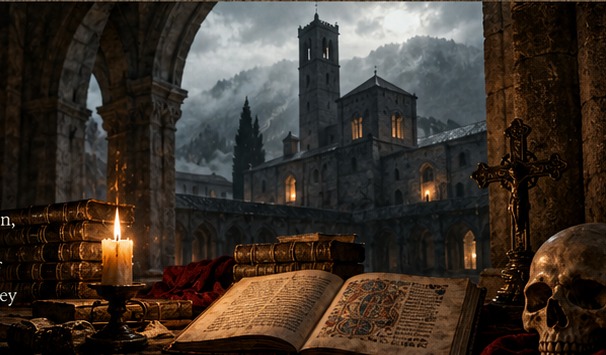
Within the Manuscript
The Story
Follow the journey of William and Adso through seven days of questions and danger.
Read the story →
The Characters
Explore the people of the abbey, their relationships, roles and secrets in the interactive guide.
Explore 36 character dossiers →
Umberto Eco
Meet the writer and scholar whose knowledge of signs and history shaped the novel.
About the author →
Hidden Symbols
Investigate laughter, language, the labyrinth, forbidden books and the search for truth.
Explore the symbols →
Seven Days
Follow an interactive day-by-day timeline, with optional spoilers for major revelations.
Open the timeline →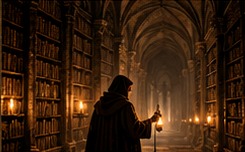
The Secret Library
Enter a fictional interactive labyrinth inspired by the abbey’s hidden collection.
Enter the library →The World of 1327
The novel is rooted in debates within the medieval Church, especially the dispute over whether Christ and the apostles possessed property. Franciscans and representatives of the papacy defended different positions, while ecclesiastical and political power shaped the discussion.
The scriptorium—the place where manuscripts were copied, studied and illuminated—embodies the extraordinary value of books before printing. In Eco’s narrative, the library is not merely a repository of learning: access to knowledge becomes a question of authority.
Discover the historical ideasFour Questions at the Heart of the Novel
How can careful observation coexist with deeply held belief?
Who decides which books may be read—and which must remain hidden?
Can evidence have more than one meaning, and can certainty mislead us?
Why might the freedom to laugh threaten institutions and established truths?
Beyond the Printed Page
The novel rewards both newcomers and rereaders: it can be approached as a murder mystery, a historical narrative or a meditation on language and interpretation. The Abbey Chronicle brings those layers together through character dossiers, an interactive timeline and a browser adventure.
Enter the Abbey · Play FreeReturn to The Novel Index